Biden versus Palin: The SNL parody
posted by Jim Chen at 11:53 PM
0 comments


 Jurisdynamics
Dedicated to the subjects and methodological tools that most vividly depict the law's interaction with societal and technological change.
The Flagship of the Jurisdynamics Network

Now that primary season is over, it's time to draw and quarter the political rules that make a mockery of America's system for selecting each major party's presidential nominee. Herewith four rules that should change before the 2012 primary:
 Caucuses must die. What a hideous way to choose candidates. All-day commitments. No privacy in voting. No absentee balloting. Rabid partisans are far more likely to attend than normal voters, especially those with families and jobs. Eliminate caucuses; rely exclusively on primaries. |  So must superdelegates. Pledged delegates to the convention are democratic. Superdelegates are not. Either let people vote, or dispense with the pretense. I prefer democracy; it's a great American tradition. Fire the superdelegates and have nothing but pledged delegates. |
 Play primary roulette. It's ludicrous to let the same two states, Iowa and New Hampshire, set the table and eliminate weaker candidates every presidential cycle. We can sort states by region and let the regions take turns going first. And let's time primaries sensibly. There's no reason to devote six weeks to one state, and then rush to four others in the next week. | 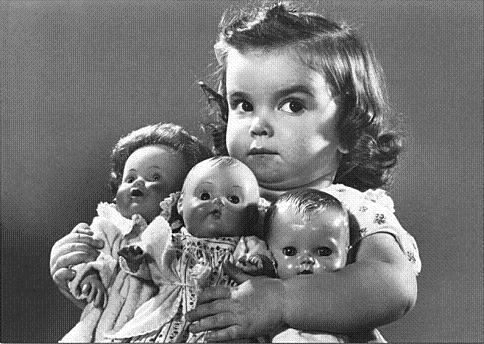 Share fairly, but not stupidly. It has become clear that neither winner-take-all nor proportional representation is a good way to allocate delegates. How about proportional representation for the lion's share of delegates in any state (75 percent?), plus a winner-take-all bonus awarding the remaining delegates to the winner of the state as a whole? |
Labels: 2008 campaign
posted by Jim Chen at 9:44 PM
1 comments
| Primary season is over, and Hillary Clinton didn't win. Even though she didn't win (enough) delegates or the Democratic nomination, she did make history and win the grudging admiration of many friends and foes, especially down the stretch. Herewith a gallery of images drawn from two New York Times slide shows, Clinton Cross-Country and Clinton's Bid Comes to a Close. |  |
 | |
 | |
 |  |
| William Butler Yeats To a Friend Whose Work Has Come to Nothing (1916) Now all the truth is out, Be secret and take defeat From any brazen throat, For how can you compete, Being honour bred . . . ? Bred to a harder thing Than Triumph, turn away And like a laughing string Whereon mad fingers play Amid a place of stone, Be secret and exult, Because of all things known That is most difficult. | |
 |  |
 | |
Photos:
| |
Labels: 2008 campaign
posted by Jim Chen at 5:42 PM
2 comments


Labels: 2008 campaign
posted by Jim Chen at 7:55 PM
0 comments
| Victor | Vanquished |
 .mp3 file) of Barack Obama by Karen Tumulty of Time magazine's Swampland blog.
 Multimedia hasn't fully displaced the written word. Herewith a pair of matched posts from the Washington Post's The Fix blog, one on what went wrong for Hillary Clinton and one on what went right for Barack Obama. Plus this overview of the Obama campaign's successful strategy.
Labels: 2008 campaign
posted by Jim Chen at 6:48 PM
0 comments
 In fairness, Senator Clinton was referring to the historical fact that primary seasons have stretched into June. She had just described Bill Clinton's 1992 campaign, which also reached June and the California primary that proved so fateful for Robert Kennedy.
Earlier today I was discussing the Democratic primary history and in the course of that discussion mentioned the campaigns that both my husband and Senator Kennedy waged in California in June 1992 and 1968 and I was referencing those to make the point that we have had nomination primary contests that go into June. That's a historic fact. The Kennedys have been much on my mind the last days because of Senator Kennedy and I regret that if my referencing that moment of trauma for our entire nation, and particularly for the Kennedy family was in any way offensive.
 John Singer Sargent, Ellen Terry as Lady Macbeth (1889)
Labels: 2008 campaign
posted by Jim Chen at 7:52 PM
1 comments
|
Labels: 2008 campaign
posted by Jim Chen at 7:44 PM
1 comments

Labels: 2008 campaign
posted by Jim Chen at 3:39 PM
1 comments

 |  |
Labels: 2008 campaign
posted by Jim Chen at 8:54 PM
1 comments
 |

Labels: 2008 campaign
posted by Jim Chen at 1:40 AM
0 comments
| Obama, Osama, and one hot kitchen Alternate video source |
New York Times editorial, The Low Road to Victory (April 23, 2008) The Pennsylvania campaign, which produced yet another inconclusive result on Tuesday, was even meaner, more vacuous, more desperate, and more filled with pandering than the mean, vacuous, desperate, pander-filled contests that preceded it. . . . On the eve of this crucial primary, [Senator Hillary Rodham] Clinton became the first Democratic candidate to wave the bloody shirt of 9/11. A Clinton television ad — torn right from Karl Rove’s playbook — evoked the 1929 stock market crash, Pearl Harbor, the Cuban missile crisis, the cold war and the 9/11 attacks, complete with video of Osama bin Laden. “If you can’t stand the heat, get out of the kitchen,” the narrator intoned. If that was supposed to bolster Mrs. Clinton’s argument that she is the better prepared to be president in a dangerous world, she sent the opposite message on Tuesday morning by declaring in an interview on ABC News that if Iran attacked Israel while she were president: “We would be able to totally obliterate them.” . . . Mr. Obama is not blameless when it comes to the negative and vapid nature of this campaign. He is increasingly rising to Mrs. Clinton’s bait, undercutting his own claims that he is offering a higher more inclusive form of politics. When she criticized his comments about “bitter” voters, Mr. Obama mocked her as an Annie Oakley wannabe. All that does is remind Americans who are on the fence about his relative youth and inexperience. |
| Annie Oakley |
Labels: 2008 campaign
posted by Jim Chen at 5:19 PM
0 comments
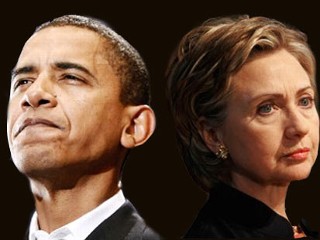 Watch it again. Read the transcript. It's impossible to miss what 10 million viewers noticed: ABC News' moderators, Charles Gibson and George Stephanopoulos, along with the national news media as a whole, were the real losers of this week's debate between Barack Obama and Hillary Clinton:
[V]iewers of all political persuasions were affronted by the moderators’ failure to ask about the mortgage crisis, health care, the environment, torture, education, China policy, the pending G.I. bill to aid veterans, or the war we’re losing in Afghanistan. Those minutes were devoted not just to recycling the Rev. Jeremiah Wright, Bosnian sniper fire and another lame question about a possible “dream ticket” but to the unseemly number of intrusive commercials and network promos that prompted the jeering at the end. The trashiest ads often bumped directly into an ABC announcer’s periodic recitations of quotations from the Constitution. Such defacing of American values is to be expected, I guess, from a network whose debate moderators refuse to wear flag pins.Kudos to Frank Rich of the New York Times for this succinct evaluation of the disastrous debate. For some comic relief, read Obsidian Wings' parody.
 |  |
 |
Labels: 2008 campaign
posted by Jim Chen at 12:39 AM
1 comments
 | It’s indisputable that autism is on the rise among children. The question is, What’s causing it? And we go back and forth, and there’s strong evidence that indicates that it’s got to do with a preservative in vaccines. — Senator John McCain |
Several large-scale studies have found no evidence of a link between thimerosal and autism, and medical groups including the Centers for Disease Control and Prevention, the Institute of Medicine and the American Academy of Pediatrics have publicly stated as much. In January, California reported an increase in autism cases, despite the removal of thimerosal from most vaccines.But because the parents who fervently believe that the government and vaccine provenders have somehow conspired to cripple their children trust none of the science, Senator McCain's comment on autism arguably represented shrewd politics.
In February, an international team of researchers, analyzing blood samples from vaccinated children, found that blood levels of ethyl mercury “fell rapidly and had largely returned to baseline levels by Day 11 after vaccination.” Those levels fell much more rapidly, for instance, than levels of the mercury people absorb by eating fish — suggesting that the injected thimerosal is less likely to build up in the blood, the researchers concluded.
| The May 2007 debate | Mike Huckabee explains further |
|---|---|
Labels: 2008 campaign
posted by Jim Chen at 10:06 PM
0 comments
| Hillary Clinton's ad | Barack Obama's ad |
|---|---|
Labels: 2008 campaign
posted by Jim Chen at 7:36 PM
0 comments
Your Host: Jim Chen | |

|
I am an expert on law, economics, and regulation. For more information, please visit my home page or download my résumé. For scholarly details, please visit my SSRN page or my Google Scholar page, or download my academic curriculum vitae. I also welcome your e-mail. |

 ssrn
ssrn  ssrn
ssrn 


Subscribe to Jurisdynamics by e-mail


|
|


Search FindLaw's database of Supreme Court decisions since 1893 (U.S. Reports, volumes 150-present). Browsable by U.S. Reports volume number and by year. Searchable by citation, case title, and full text.
Browsing
Supreme Court decisions: by volume, by year
Citation Search
Title Search
Full-Text Search




The Jurisdynamics Network's visitors
Accident Compensation Claims
Injured in an accident that was not your fault? Make a compensation claim with the accident claims specialist.
Latimer Lee — Manchester solicitor
PhD Funding advice from Online PhD Degree Programs


 Memorandum

