Sunday, September 04, 2011

Spending the Day "At Home"

Bill Bryson, At HomeSince a lot of people are home for a few days because of the holidays, I thought I'd use the opportunity to put in a plug for Bill Bryson's book, At Home. The subtitle is "A Short History of Private Life," but it's really more a history of houses, their rooms, functions, and uses. It's full of fascinating information, such as how a professional gardener came to build the great Victorian Crystal Palace, why country homes in England are called "Halls" (because in Anglo-Saxon times even large houses were single rooms, and the whole things was called a hall), and why it's difficult to build safe staircases (because posture and movement are quite different for people going up and those going down). Not everyone will share this taste, but I think it's exciting to find out about the history of something when it never occurred to you before that it had actually had a history.

One point that Bryson makes is about the importance of the Victorian Era — say the time between Jackson and TR in American terms. At the beginning of this period, it was still true — as it had been in Roman times and even earlier — that the fastest way to move either goods or information was on a galloping horse. Medicine, sanitation, and architecture had also made little real progress since the fall of Rome (and at least in terms of sanitation things had gone backwards). But at the end of this period, people were traveling by train, communicating by telegraph and even phone, using anesthetics and antiseptics for surgery, using new materials such as iron, steel and glass for construction, replacing candles with electric lights, and using flush toilets and major urban sewage systems. Arguably, no single generation of humanity has ever seen such important transformations.

It's also remarkable to think of the scale of construction in the Victorian era: transcontinental railways, sewage systems, canals, bridges that still stand today, hundreds of major urban parks (with Central Park as the most famous example). We would be very hard-pressed to duplicate these feats today, as shown difficulties of building high-speed rail in the U.S. It is also quite noteworthy that so many of the great Victorian builders were essentially amateurs who came from very humble beginnings and somehow found themselves designing great houses and changing the English landscape. The modern world seems much more straitjacketed by comparison.

I suspect that we also underestimate the amount of legal change that took place to this period. Just as the "Victorian" became a synonym for "stuffy and old-fashioned" in the Twentieth Century, the legal rules that emerged from this period became the traditional common law against which reformers railed. But the Victorian period also saw the creation of whole new bodies of law (corporations, antitrust), major procedural reforms (from writs to code pleading), the origins of legal realism (with Holmes), the abolition of slavery, the invention of the modern American law school, and much more.

Labels: , , ,

Wednesday, September 26, 2007

Literary Warrant [19]

  • Association of American Railroads, National Rail Freight Infrastructure Capacity and Investment Study (Final Report) (September 2007)

    "This study is an assessment of the long-term capacity expansion needs of the continental U.S. freight railroads. It provides a first approximation of the rail freight infrastructure improvements and investments needed to meet the U.S. Department of Transportation's (U.S. DOT) projected demand for rail freight transportation in 2035. The U.S. DOT estimates that the demand for rail freight transportation—measured in tonnage—will increase 88 percent by 2035....

    "[T]he findings point clearly to the need for more investment in rail freight infrastructure and a national strategy that supports rail capacity expansion and investment."—Executive Summary.

  • John C. Austin et al., The Brookings Institution, Great Lakes Economic Initiative, Healthy Waters, Strong Economy: The Benefits of Restoring the Great Lakes Ecosystem (September 2007)

    "Restoring the Great Lakes to health will create $50 billion in economic benefit for the region, a new cost-benefit analysis conducted by the Brookings Institution Metropolitan Policy Program finds.

    "According to Healthy Waters, Strong Economy: The Benefits of Restoring the Great Lakes Ecosystem (16 pages, PDF), efforts to improve the health of the Great Lakes will produce economic gains that are worth almost twice as much as the cost of those efforts. Funding to modernize wastewater treatment systems would reduce sewage and other contamination, which would result in improved water quality and fewer beach closings; efforts to eliminate invasive species would increase the supply of fish in the lakes and stem the dislocation of sport-fishery workers and assets; restoring and protecting wildlife habitat for birds and waterfowl would benefit naturalists and hunters; and removing contaminated sediment in areas of high concern would reclaim communities and increase property values."—Press release (September 19, 2007)

  • Anthony H. Cordesman, Arleigh A. Burke Chair in Strategy, The Center for Strategic and International Studies (CSIS), Global Energy, Economic Interdependence, Iraq And the Gulf (September 2007)

    "The real issue is not taking oil for the US; it is securing oil for the global economy. The US depends on that economy for its growth and at least indirectly for part of every job in the US. It not only needs direct imports, it needs oil to flow from Gulf to all of its major trading partners: Europe, China, Japan, South Korea, and all of the other powers that trade and invest with the US. If they cannot buy oil reliably at market prices, the world economy will weaken and the US economy with it.

    "As the attached briefing show, the stability and security of the Gulf is absolutely critical to the world and will be for decades to come. That security also is not a matter of Iraq's oil or Iran's. It is the security of all Gulf oil and especially southern Gulf states like Saudi Arabia, Kuwait, Qatar, and the UAE. If the US goes to war with a nation like Iraq, it is because of the strategic importance of the region, and the broader threat it poses, not because of the size of oil reserves that the US could only exploit profitably if it totally controlled Iraqi oil for decades."—Synopsis.

  • Environmental Defense, Analysis of Greenhouse Gas Reductions from an Energy Bill (September 24, 2007)

    "A new analysis released today by Environmental Defense shows that energy legislation passed by the House and Senate would let greenhouse emissions continue to increase for the next three decades, even if the best fuel-saving and renewable energy provisions in both bills were combined in conference committee."

  • Gareth Evans, President, International Crisis Group & Chair, International Atomic Energy Agency (IAEA) Scientific Forum 2007, Vienna, Nuclear Energy in the Next Quarter Century: The IAEA's Role (Concluding Report to General Conference) (September 20, 2007)

    "Throughout the deliberations of the Scientific Forum there was a strong sense that the matters we were discussing were at the cutting edge of the international public policy debate—with widespread current concerns about energy security, about the environmental impact of fossil fuels and renewed fears about a new surge of nuclear weapons proliferation making the whole constellation of issues about both the peaceful and non-peaceful uses of nuclear energy more alive and important than they have been for many years. There was a recurring hope evident in the presentations that policymakers would be willing to think hard about whether present policies and institutional structures and resources were really up to the multiple challenges the international community was now facing."

  • Lisa Heinzerling, Georgetown University, O’Neill Institute for National and Global Health Law Scholarship, Climate Change, Human Health, and the Post-Cautionary Principle (Research Paper no. 4) (September 2007)

    "In this Article, I suggest two different but related ways of reframing the public discourse on climate change. First, I propose that we move further in the direction of characterizing climate change as a public health threat and not only as an environmental threat. Second, I argue that we should stop thinking of responses to climate change in terms of the precautionary principle, which counsels action even in the absence of scientific consensus about a threat. We should speak instead in terms of a 'post-cautionary' principle for a post-cautionary world, in which some very bad effects of climate change are unavoidable and others are avoidable only if we take dramatic steps, and soon. These points are related insofar as they together create a moral imperative both to adapt to the changes we cannot prevent and to mitigate those we can. Without these efforts, people will fall ill and many will die, and we know now that this will occur. No fancy moral theory is required to condemn, and to make every attempt to avert, this large-scale knowing killing."—Abstract.

  • Justice Talking: The Public Radio Show about Law and American Life, Revisiting New Orleans: Katrina's Effect on the Legal System (September 17, 2007)

    "Two years after the largest natural disaster in U.S. history, New Orleans has been forced to redevelop neighborhoods, schools and most of its urban infrastructure. But what has happened to the city’s criminal justice system? Join us on this edition of Justice Talking for a detailed look at how Hurricane Katrina has affected police practices, the state and federal court systems, jails and alternative sentencing plans, and what the changes mean for citizens of and visitors to this famous city."—Overview.

  • National Aeronautics and Space Association (NASA), NASA Finds Greenland Snow Melting Hit Record High in High Places (September 25, 2007)

    "A new NASA-supported study reports that 2007 marked an overall rise in the melting trend over the entire Greenland ice sheet and, remarkably, melting in high-altitude areas was greater than ever at 150 percent more than average. In fact, the amount of snow that has melted this year over Greenland could cover the surface size of the U.S. more than twice."

  • National Parks Conservation Association, Unnatural Disaster: Global Warming and Our National Parks (September 24, 2007)

    National park"Hot, dry conditions generated by global warming can cause highly destructive wildfires in the national parks. At Yosemite National Park, warming and drought have made the wildfire season longer and more damaging. Higher temperatures at Saguaro National Park are enabling invasive grasses to displace native plants and fuel wildfires, which used to be rare.

    "Wildfires strain the budget of the already severely under-funded National Park Service, risk the safety of visitors and park staff, drastically alter natural ecosystems, and contribute harmful smoke to the atmosphere—making it harder to breathe in already polluted parks like Sequoia.

    "Congress and the Administration should act now to slow or halt global warming. If we take meaningful steps now, future generations of Americans should be able to fully experience the shared history and natural wonders protected by our national parks. If we wait too long, much will be lost."—Press release.

  • Eric A. Posner & Cass Sunstein, University of Chicago Law School, Climate Change Justice (U. of Chicago Law & Economics, Olin Working Paper No. 354; U. of Chicago, Public Law Working Paper No. 177) (August 2007)

    "Greenhouse gas reductions would cost some nations much more than others, and benefit some nations far less than others. Significant reductions would impose especially large costs on the United States, and recent projections suggest that the United States has relatively less to lose from climate change. In these circumstances, what does justice require the United States to do? Many people believe that the United States is required to reduce its greenhouse gas emissions beyond the point that is justified by its own self-interest, simply because the United States is wealthy, and because the nations most at risk from climate change are poor. This argument from distributive justice is complemented by an argument from corrective justice: The existing stock of greenhouse gas emissions owes a great deal to the past actions of the United States, and many people think that the United States should do a great deal to reduce a problem for which it is largely responsible. But there are serious difficulties with both of these arguments. Redistribution from the United States to poor people in poor nations might well be desirable, but if so, expenditures on greenhouse gas reductions are a crude means of producing that redistribution: It would be much better to give cash payments directly to people who are now poor. The argument from corrective justice runs into the standard problems that arise when collectivities, such as nations, are treated as moral agents: Many people who have not acted wrongfully end up being forced to provide a remedy to many people who have not been victimized. The conclusion is that while a suitably designed climate change agreement is in the interest of the world, a widely held view is wrong: Arguments from distributive and corrective justice fail to provide strong justifications for imposing special obligations for greenhouse gas reductions on the United States. These arguments have general implications for thinking about both distributive justice and corrective justice arguments in the context of international law and international agreements."—Abstract.

  • Qin Chen, Lixia Wang, Haihong Zhao, & Scott L. Douglass, Prediction of Storm Surges and Wind Waves on Coastal Highways in Hurricane-Prone Areas, Journal of Coastal Research, v.23, pp.1304-17 (September 2007)

    "A recent study reveals that more than 60,000 miles (96,500 km) of coastal roadways are in the 100-year floodplain in the United States and vulnerable to the attacks of water surges and storm waves generated by hurricanes. Mitigating the effects of coastal flooding requires accurate predictions of the destructive hydrodynamic forces. This study demonstrates a methodology for integrating state-of-the-art storm surge and wave prediction models as an effective tool for engineering design of coastal infrastructure and facilitation of hurricane emergency management. The methodology has the capability of resolving complex geometry and topography typical of coastal road flooding. The surge model incorporates moving shoreline conditions associated with flooding and allows for nonlinear interactions among astronomical tide, storm surge, and wave setup. The wave model takes into account the unsteadiness of wind forcing, currents, and water levels. A historical hurricane event is simulated for the landfall of Hurricane Georges (1998) on the north coast of the Gulf of Mexico. Good agreement between the modeled and measured surge hydrographs in Mobile Bay, Alabama, has been found. The advanced surge model (ADCIRC), coupled with the wave model, successfully simulates the inundation and measured high water marks along two highways adjacent to the bay. The thirdgeneration wind wave model (SWAN) coupled with the hydrodynamic model reveals the temporal and spatial variability of wave heights and wave periods in the Mobile Bay estuary and on the flooded highways. Numerical experiments were carried out to examine the response of the estuary to various forcing agents, including the offshore surge hydrograph, local wind forcing, and wave thrust."—Abstract.

  • Martha G. Roberts, Timothy D. Male & Theodore P. Toombs, Environmental Defense, Potential Impacts of Biofuels Expansion on Natural Resources: A Case Study of the Ogallala Aquifer Region (2007)

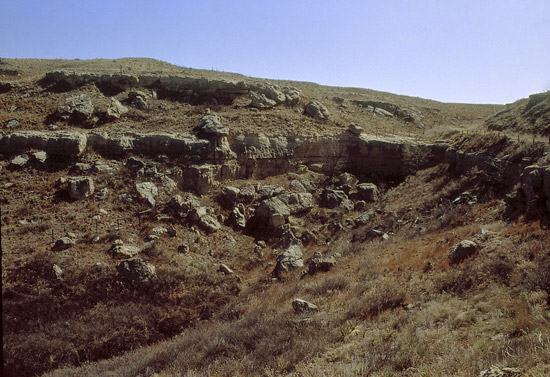
    Ogallala outcrops"Biofuels are getting a lot of attention as a way to slow global warming. But not all biofuels are created equal. Whether they help the environment depends on how they are produced. A new Environmental Defense report recommends polices that will ensure that renewable fuels live up to their promise. Specifically, our study shows that we need:

    • a low-carbon fuel standard to spur production of biofuels with low greenhouse gas emissions and

    • better protections for water and land resources that are vulnerable to increasing production of biofuel feedstocks."

  • Brian Seasholes, National Center for Policy Analysis, Bad for Species, Bad for People: What's Wrong with the Endangered Species Act and How to Fix It (September 2007)

    "The Endangered Species Act (ESA), passed in 1973, was designed to recover species to a level at which they are no longer considered endangered and therefore do not require the Act's protection. Unfortunately, the law has had the opposite effect on many species. The ESA can severely penalize landowners for harboring species on their property, and as a result many landowners have rid their property of the species and habitat rather than suffer the consequences.

    "Over 1,900 species of plants and animals—1,351 domestic and 570 foreign—are currently considered by the federal government to be in danger of extinction. Once a species is listed, they are subject to a variety of conservation efforts, including federal recovery plans that can include a wide variety of measures including habitat protection. However, these conservation efforts rarely, if ever, consider the total costs of species recovery to federal, state or local governments, and especially to private landowners."—Executive Summary.

  • Bernice Steinhardt, Director, Strategic Issues, United States Government Accountability Office (GAO), Influenza Pandemic: Opportunities Exist to Clarify Federal Leadership Roles and Improve Pandemic Planning (Testimony Before the Subcommittee on Emerging Threats, Cybersecurity, and Science and Technology, Committee on Homeland Security, House of Representatives) (September 26, 2007)

    "An influenza pandemic is a real and significant potential threat facing the United States and the world. Pandemics are unlike other emergencies because they are not a singular event nor discretely bounded in space and time.

    "This testimony addresses (1) federal leadership roles and responsibilities for preparing for and responding to a pandemic, (2) our assessment of the Strategy and Plan, and (3) opportunities to increase clarity of federal leadership roles and responsibilities and improve pandemic planning. GAO used its characteristics of an effective national strategy to assess the Strategy and Plan."—Why GAO Did This Study.

  • United Nations, Gateway to the UN System's Work on Climate Change

    A consolidation of news, reports, and information about UN instruments and agencies that deal with climate change.

  • United States Department of Justice, Office of the Inspector General, Audit Division, Superfund Activities in the Environment and Natural Resources Divisions for Fiscal Years 2004 and 2005 (Audit Report 07-43) (September 2007)

    "As required by CERCLA, the DOJ Office of the Inspector General conducted this audit to determine if the cost allocation process used by ENRD and its contractor provided an equitable distribution of total labor costs, other direct costs, and indirect costs to Superfund cases during FYs 2004 and 2005. We compared costs reported on the contractor-developed Accounting Schedules and Summaries for FYs 2004 and 2005 to costs recorded on DOJ accounting records to review the cost distribution system used by ENRD to allocate incurred costs to Superfund and non-Superfund cases.

    "In our judgment, ENRD provided an equitable distribution of total labor costs, other direct costs, and indirect costs to Superfund cases during FYs 2004 and 2005. However, we make three recommendations to improve ENRD operations and ensure compliance with DOJ directives."—Executive Summary.

  • United States Government Accountability Office, Natural Hazard Mitigation: Various Mitigation Efforts Exist, but Federal Efforts Do Not Provide a Comprehensive Strategic Framework (Report to the Ranking Member, Committee on Financial Services, House of Representatives, GAO-07-403) (August 2007)

    "The nation has experienced vast losses from natural hazards. The potential for future events, such as earthquakes and hurricanes, demonstrates the importance of hazard mitigation—actions that reduce the long-term risks to life and property from natural hazard events. GAO was asked to examine (1) natural hazards that present a risk to life and property in the United States, areas that are most susceptible to them, factors that may be increasing these risks, and mitigation activities that reduce losses; (2) methods for encouraging and impediments to implementing mitigation activities; and (3) collaborative efforts of federal agencies and other stakeholders to promote mitigation."—Why GAO Did This Study.

  • WeatherBill, Inc., Temperature Trends in Major U.S. Cities (September 12, 2007)

    "WeatherBill analyzed 30 years of daily temperature data from the nation's most populous cities to determine longterm trends in daily average temperatures in major US cities. The study is restricted to weather data from 130 cities which, as of the 2006 Census, had more than one hundred thousand residents and maintained a National Weather Service weather station with a clean historical record of at least 30 years of daily data, either within the city proper or at a nearby location.

    "To isolate seasonal temperature trends for each city in question, daily average temperature data is studied for both winter (November through February) and summer (June through September) seasons. Daily average temperature is defined as the midpoint of the high and low temperatures of the day. For each city, the mean (or average) and standard deviation (or volatility) of daily average temperature are calculated for winters and summers from 1977 through 2006. A Mann-Kendall test is used to determine the statistical significance of seasonal trends in the means and standard deviations of temperature over time."—Introduction.

Labels: , , , , , ,

Thursday, August 30, 2007

Literary Warrant [17]

  • beSpacific, $114 Billion Funds Gulf Coast Recovery (August 28, 2007)

    "24 billion went to rebuild the Gulf Coast states and provide survivors with a place to live, repair damaged infrastructure, and build houses and schools in 2007. Of the $114 billion allocated for Gulf Coast recovery, 84 percent has either been disbursed or is awaiting claims. FEMA awarded $8.3 billion in public assistance funding for education, criminal justice, public works, health and hospitals, and historic and cultural resources; education and public works receive $1.3 billion apiece. As of July 2007, over 95,000 households have received aid."—DHS.

  • Joel K. Bourne, Jr., New Orleans: A Perilous Future, National Geographic (August 2007)

    "With seas rising, storms getting stronger, and ground subsiding, another disaster like Katrina seems inevitable. Yet some residents would rather run that risk than leave the place they call home.

    "Hurricane Katrina, the costliest natural disaster in United States history, was also a warning shot. Right after the tragedy, many people expressed a defiant resolve to rebuild the city. But among engineers and experts, that resolve is giving way to a growing awareness that another such disaster is inevitable, and nothing short of a massive and endless national commitment can prevent it."

  • Center for American Progress, New Orleans by the Numbers: A City Struggles to Rebuild (August 29, 2007)

    "Two years after Hurricane Katrina hit New Orleans, the city faces challenges as it tries to rebuild: not just those posed by mountains of rubble and the prospect of future hurricanes, but also a rebuilding effort hampered by inaction, mismanagement, and corruption." Related materials include an interactive map for identifying parish-by-parish evidence of progress.

  • Federal Emergency Management Association (FEMA), Accommodating People With Disabilities In Disasters: A Reference Guide To Federal Law (Release no. HQ-07-169) (August 21, 2007)

    "The Department of Homeland Security's Federal Emergency Management Agency (FEMA) has released a new reference guide that outlines existing legal requirements and standards relating to access for people with disabilities. A Reference Guide for Accommodating Individuals with Disabilities in the Provision of Disaster Mass Care, Housing and Human Services is the first of a series of disability-related guidelines to be produced by FEMA for disaster preparedness and response planners and service providers at all levels."—Press release.

  • Michael Grunwald et al., Hurricane Katrina—Two Years Later (Time magazine special report)

    "The most important thing to remember about the drowning of New Orleans is that it wasn't a natural disaster. It was a man-made disaster, created by lousy engineering, misplaced priorities and pork-barrel politics. Katrina was not the Category 5 killer the Big Easy had always feared; it was a Category 3 storm that missed New Orleans, where it was at worst a weak 2. The city's defenses should have withstood its surges, and if they had we never would have seen the squalor in the Superdome, the desperation on the rooftops, the shocking tableau of the Mardi Gras city underwater for weeks."

  • Insurance Information Institute, Hurricane Katrina and Insurance: Two Years Later $40.6 Billion in Insurance Claim Dollars Aid Recovery (August 27, 2007)

    "The magnitude of Hurricane Katrina triggered a reexamination of how the United States deals with the financial consequences of natural disasters among insurers, reinsurers and public policymakers, which continues today, according to the Insurance Information Institute (I.I.I.).

    "Despite the attention focused on lawsuits filed following this catastrophic storm, the number of claims in litigation accounted for a very small percentage of the total number of claims filed and most of those are no longer in contention. The I.I.I. estimates that fewer than 2 percent of homeowners claims in Louisiana and Mississippi were disputed either through mediation or litigation.

    "Insurance companies have paid an estimated $40.6 billion to policyholders on 1.7 million claims for damage to homes, businesses and vehicles in six states. By contrast, Hurricane Andrew, the previous record holder, resulted in $15.5 billion in losses in 1992 ($22.2 billion in 2006 dollars) and 790,000 claims."—Press release.

  • Charles Kenny, The World Bank, Sustainable Development Network, Finance, Economics and Urban Division, Infrastructure Governance and Corruption: Where Next? (Policy Research Working Paper 4331) (August 2007)

    "Governance is central to development outcomes in infrastructure, not least because corruption (a symptom of failed governance) can have significantly negative impact on returns to infrastructure investment. This conclusion holds whether infrastructure is in private or public hands. This paper looks at what has been learned about the role of governance in infrastructure, provides some recent examples of reform efforts and project approaches, and suggests an agenda for greater engagement—primarily at the sector level—to improve governance and reduce the development impact of corruption. The discussion covers market structure, regulation, state-owned enterprise reform, planning and budgeting, and project design."—Abstract.

  • Eli Lehrer, Competitive Enterprise Institute, Watery Marauders: How the Federal Government Retarded the Development of Private Flood Insurance (Issue Analysis no. 8) (August 2007)

    "This paper describes how America's National Flood Insurance Program came into existence and seeks to answer the question of why private flood insurance never developed in the United States on a significant scale. It consists of three sections. The first section attempts to provide a brief theoretical framework for thinking about flood insurance. It describes what flood insurance does and presents a theory as to how it ought to work. The second section provides the early history of the flood insurance program. It outlines how the federal government first took on the responsibility of protecting the nation from flooding and how Congress failed in its first effort to offer federal flood insurance. The third section explains how America got the system of flood insurance that it has today. It explains how the Tennessee Valley Authority, U.S. Geological Survey, and a variety of local governments gathered enough risk data to make federal flood insurance palatable to Congress, how Congress implemented a program, and then stripped it of its risk-based character.

    "The paper reaches a simple conclusion: Flood insurance, in its current form, did not emerge as a result of market failure. While some factors, including the role of state regulation, remain undetermined, the current situation represents an example of what economists call 'government failure.'"—Executive Summary.

  • National Agricultural Law Center, Congressional Research Service Reports

    "The Congressional Research Service is the public policy research arm of the United States Congress and solely serves Congress as a source of nonpartisan, objective analysis and research on all legislative issues. Through the Congress, the National Agricultural Law Center is periodically receiving CRS reports related to agriculture and food issues. New and updated reports will be posted here as they are obtained." Topics include: Renewable Energy, Resources—Conservation, Resources—Wildlife, and Rural Development.

  • National Wildlife Federation (NWF), Hurricane Katrina Report Card (August 2007)

    "Two years after Hurricane Katrina much has become clear. We know that the devastation in New Orleans was less a natural than a man-made disaster. Katrina's surge into New Orleans and surrounding areas was the direct result of poorly constructed levees, an ill-conceived navigation channel, and the destruction of millions of acres of coastal wetlands. Furthermore, the storm's intensity itself was fueled by unusually warm waters in the tropical Atlantic due, in part, to global warming pollution.

    "How have Congress and the Administration responded to these lessons of Katrina and addressed the chief causes of its tragic aftermath? A report card is due on the federal government's response to global warming, reforming the Army Corps of Engineers and the Federal Emergency Management Agency (FEMA), and restoring the wetlands along the Gulf Coast that act as a natural buffer to storms."

  • Nuclear Energy Institute (NEI), Survey: Nuclear Power Plant Neighbors Accept Potential for New Reactor Nearby by Margin of Nearly 3 to 1.

    "Eighty-two percent of Americans living in close proximity to nuclear power plants favor nuclear energy, and 71 percent are willing to see a new reactor built near them, according to a new public opinion survey of more than 1,100 adults across the United States. Source: Bisconti Research, Inc. with Quest Research Group."

  • United Nations, Gateway to the UN System's Work on Climate Change (August 22, 2007)

    "The United Nations launched Gateway to the UN System's work on climate change that provides easier access to climate change information, such as fact sheets, news, calendar of events, and links to the pages describing the work on climate change issues by various UN System organizations and specialized agencies."

  • United Nations Environment Programme (UNEP), Global Outlook for Ice & Snow (2007)

    "Ice, snow and climate change are closely linked. The Global Outlook for Ice and Snow investigates those connections, the current situation of ice and snow and the global significance of changes, now and in the years to come. The book was prepared for World Environment Day 2007 to provide an up-to-date assessment on this year's theme: Melting Ice—A Hot Topic? The Global Outlook for Ice and Snow is the second thematic assessment report in UNEP's Global Environment Outlook series."—Achim Steiner, United Nations Under-Secretary-General and Executive Director, UNEP, Foreword.

  • United Nations Framework Convention on Climate Change, Vienna Climate Change Talks 2007: AWG 4 and the Dialogue 4 (August 27-31, 2007)

    "Around 1,000 representatives from governments, business and industry, environmental organizations and research institutions are gathered this week for the Vienna Climate Change Talks 2007. The talks, held under the auspices of the United Nations Framework Convention on Climate Change (UNFCCC), aim at setting the stage for the United Nations Bali Conference, next December. More information is available on the Web site, including side event details, submitted papers and webcast links."

  • United States Environmental Protection Agency (EPA), Office of Inspector General, Improved Management Practices Needed to Increase Use of Exchange Network (Audit Report No. 2007-P-00030) (August 20, 2007)

    "Although EPA established a partnership with the Exchange Network's governance bodies to assist them with accomplishing Network initiatives, more improvements are needed to ensure Network partners fully utilize the Network. These partners include EPA, States, tribes, territories, and other parties with whom EPA and States exchange information. EPA should improve its methods for selecting and prioritizing which data flows to implement. EPA also needs to take further steps to complete measurements of Network initiatives to ensure investments are delivering expected results. In addition, EPA needs to improve its internal system development practices to ensure EPA offices perform cost benefit analyses for new or upgraded environmental systems. Further, EPA should strengthen its policies to define when offices should utilize the Network for receiving environmental information."—What We Found.

  • United States Environmental Protection Agency (EPA), Office of Inspector General, Making Better Use of Superfund Special Account Funds for Thermo Chem (Early Warning Report No. 2007-S-00002) (August 20, 2007)

    "We found that Region 5 missed an opportunity to make timely and better use of the funds in the Thermo Chem special account. In 2004, Region 5 staff recommended the reclassification of approximately $2.8 million from the Thermo Chem special account. However, these funds were not reclassified because the site managers were unaware that action was needed or required. In addition, while EPA's guidance states that 'Regions' are responsible for identifying special accounts having balances that are more than anticipated future site needs, it does not specify the title of the regional official responsible for doing so or responsible for processing the reclassification."—What We Found.

  • World Business Council for Sustainable Development, Energy Efficiency in Buildings: Business Realities and Opportunities (Facts & Trends) (Summary Report) (August 21, 2007)

    "Survey finds green costs overestimated by 300% and a need to foster zero net energy construction. Key players in real estate and construction misjudge the costs and benefits of 'green' buildings, creating a major barrier to more energy efficiency in the building sector...."—Press release.

Labels: , , , , , ,

Google
 
Web Jurisdynamics